The Estate Story
The Estate Story
5 generations on, the love of this Island, its beauty, and our respect for nature drive us to live and work the way we do.
Elma and Lennox Napier > Micheal Napier > Alan Napier > Julia Napier > Lucio and Amand
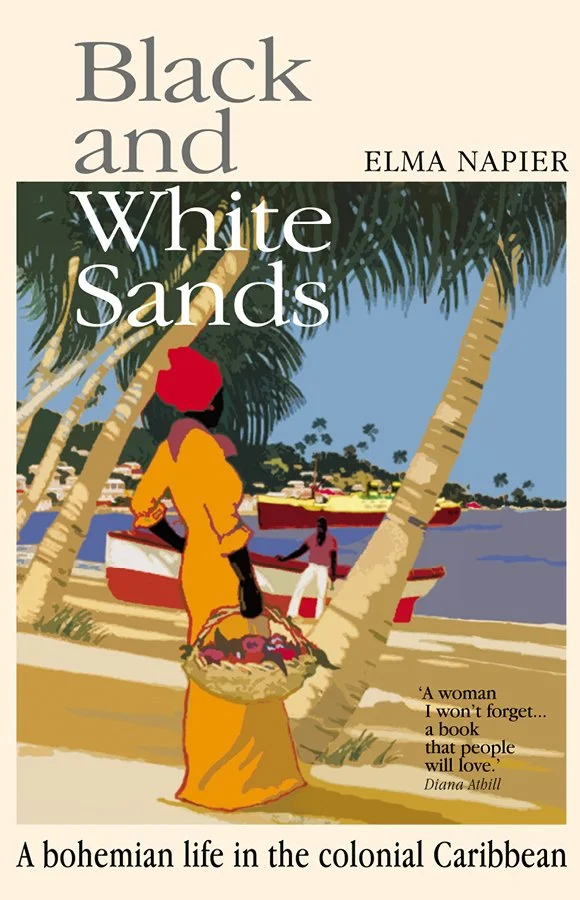
Read Elma Napier’s remarkable memoir chronicles her love affair with Dominica. It began in 1932 when she turned her back on London’s high society to build a home in Calibishie, then a remote village on Dominica’s north coast. Go here.
In the Beginning
It all began with a love story between Lennox and Elma Napier (nee Gordon-Cumming). Lennox suffered from tuberculosis from fighting in the trenches in WWI. He needed a warm climate, and so in the 1930s, they travelled through the Eastern Caribbean in search of a new home. When they landed in Dominica, it was love at first sight. They left England and the aristocratic conventional milieu with which they belonged to live a rural bohemian life on the island of Dominica.
They travelled with their two children, Patricia (7) (later Patrica Honychurch, mother to historian Lennox Honychurch), Michael (4) (who inherited Pointe Baptiste and father to Alan Napier), and Daphne Gibbs (18) (later Daphne Agar) from Elma’s first marriage, who was instrumental in starting DBS radio, Fort Young Hotel amoung other things.
Elma, author and politician, was born in Scotland in 1892 and wrote Black and White Sands, a memoir of her life in Dominica. It talks about her political life as the first woman in any West Indian parliament, her love for the island's turbulent landscapes and her curiosity about the lives and culture of its people. It also talks about life at Pointe Batiste from its construction to its various visitors.
Lennox died ten years after they settled in Dominica, and Elma died in 1973.
Michael Napier (1928 - 2018)
We came to live in Dominica in November 1932 with my half-sister Daphne Agar, my sister Patricia Honychurch, and myself, then aged four.
I have lovely memories of my childhood. My father spent much time beautifying the estate and created two flourishing vegetable gardens.
The beaches in those days were strictly private, and bathing suits were often dispensed with.
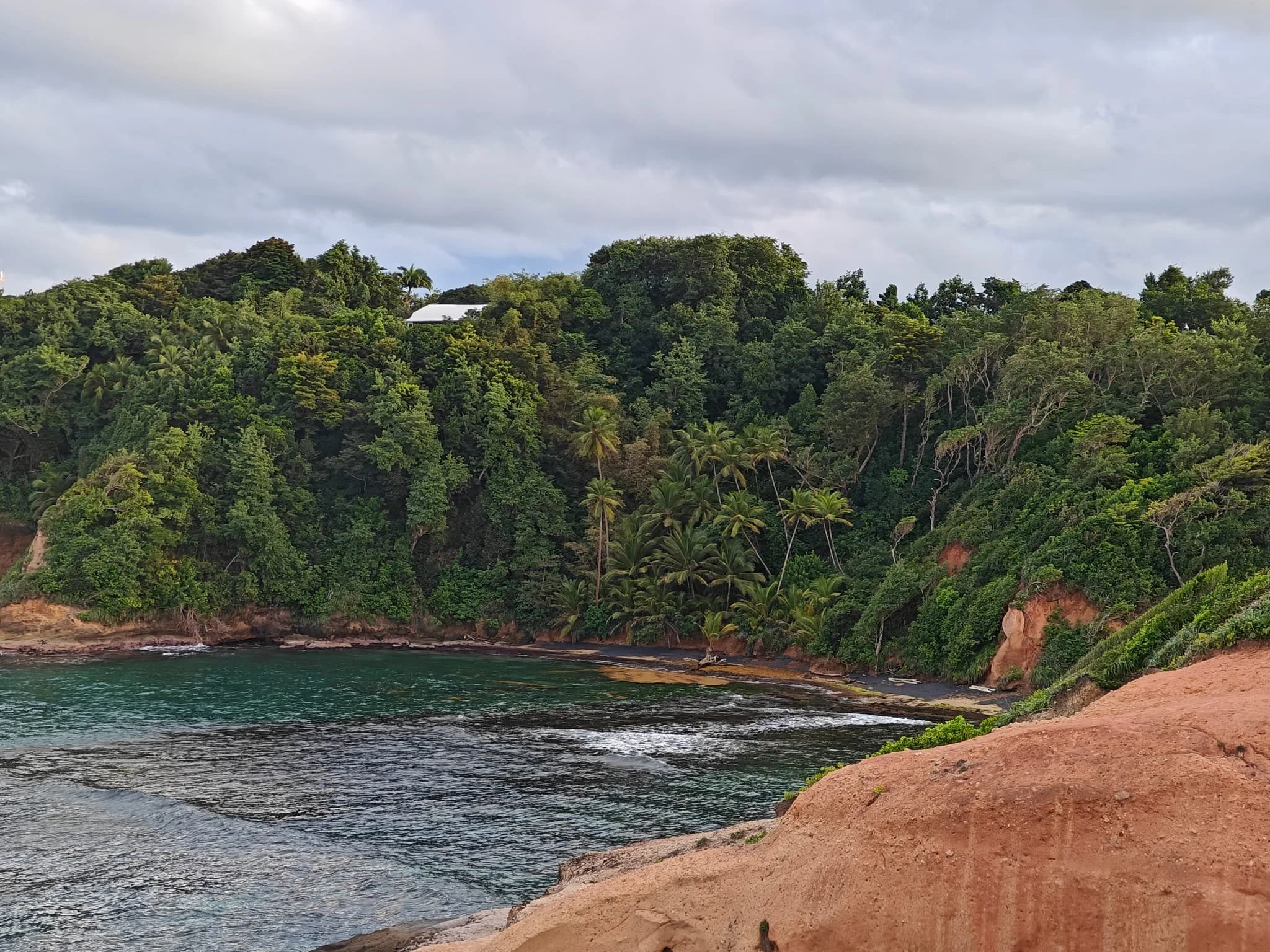
Although recent years have seen much local development, Pointe Baptiste itself has remained unspoiled, and the adjacent village of Calibishie is still one of the loveliest and most friendly on the island. In a world which is becoming increasingly uniform, it remains a place which is different amid an environment of outstanding natural beauty.
Alan Napier
When I came back to live here, I could not find any chocolate I liked on the Island. We had 4 cacao trees in our garden, so I started like that, for my own consumption. And for 5 years, I made chocolate in the back of my kitchen.
But then more and more neighbours, friends and sailors came asking for chocolate, and my daughter was very enthusiastic, so in 2016 we constructed the chocolate factory.
I still enjoy eating chocolate very much.
Julia Napier
Childhood memories: my first steps in Pointe Baptiste, wandering on the red rocks with my cousins, the coolness of the rivers, the summer sun, swimming in the sea with my grandparents...
At the time the chocolate factory was being built, my partner Emmanuel Giffard and I ran a restaurant in France. We made a habit of coming here during the winter to help my father and make chocolate.
As life went on, we had two children, and then it felt like the obvious thing to do: we wanted to see them grow up here and work alongside my father at the chocolate factory.
Amand (5 years old): “It is so beautiful’’ and Lucio (3 years old): “I love chocolate”.
The Historical Guesthouse
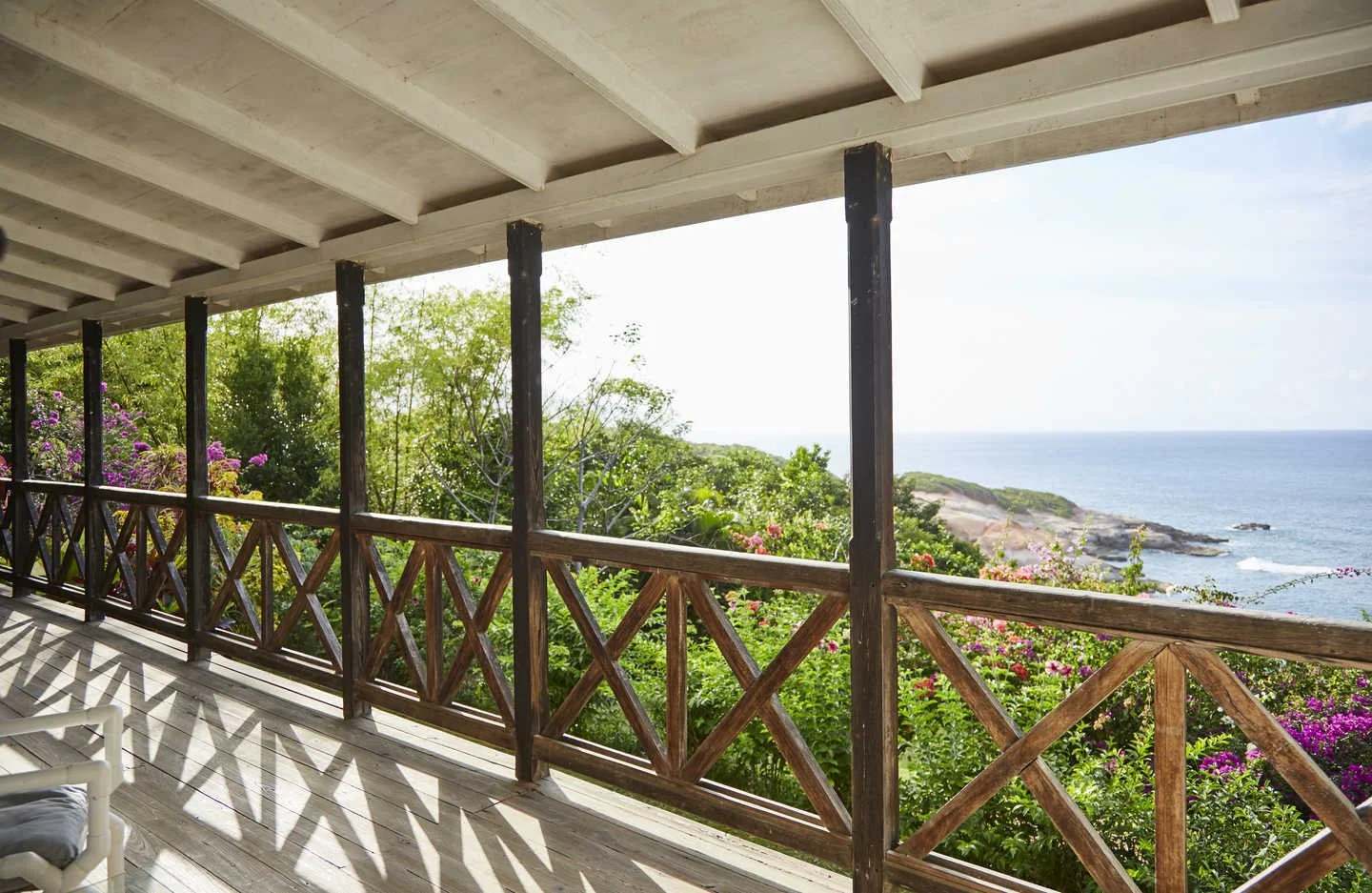
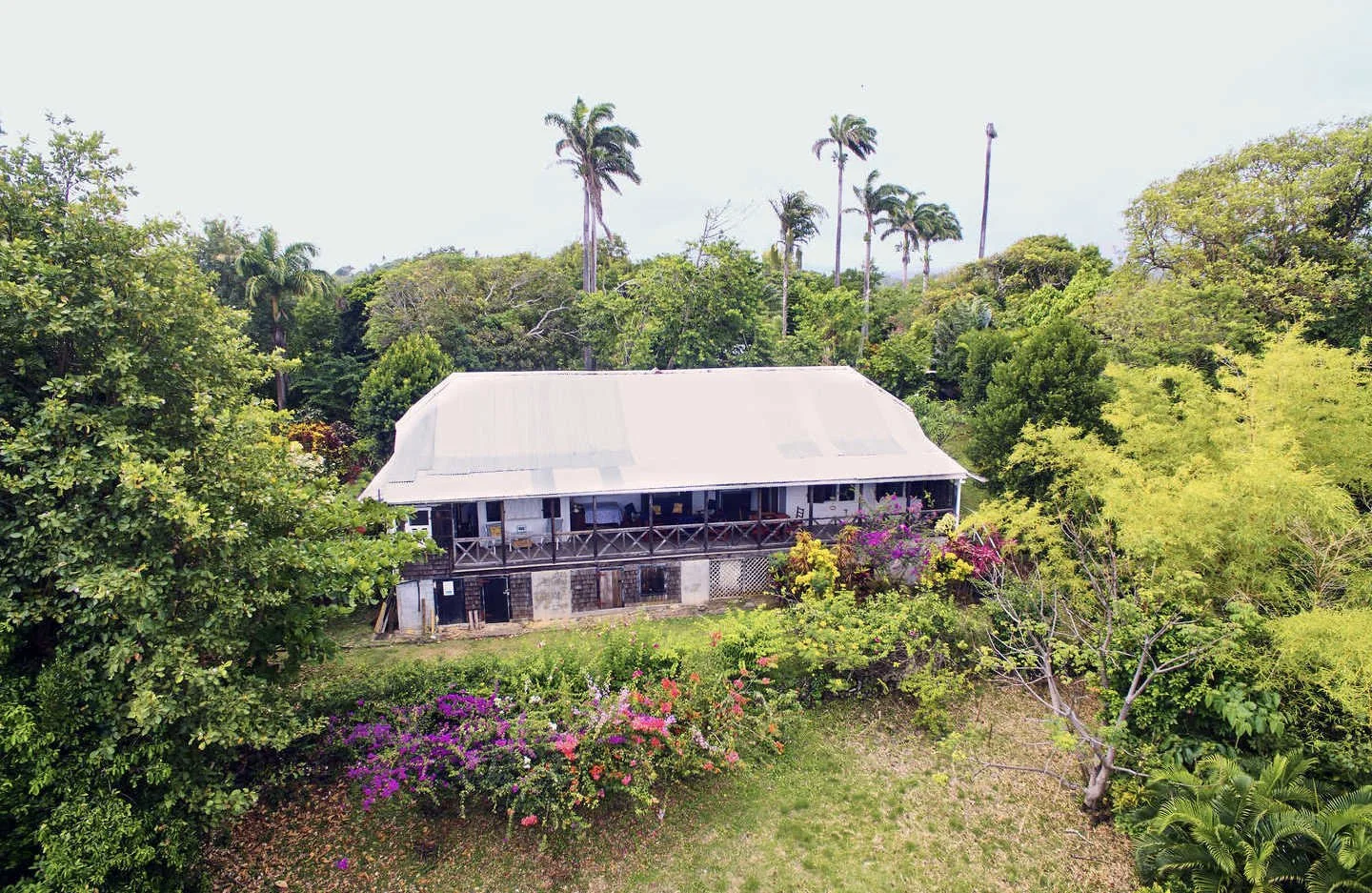
This 1930's Villa is a beautiful home, lovingly built in the colonial style and rich in history with its antique furnishings, paintings and library. From its vast veranda, you can admire the sea, the Red Rocks and the islands of Marie Galante, the Saintes and Guadeloupe.
Designed by Lennox Napier with the help of a local architect, it was constructed in 1934 using pitch-pine imported from Canada to Roseau and then from Roseau to Black Beach by fishermen's boats.
It was more strongly built than accords with current practice in order to provide maximum protection against hurricanes.